
As the global manufacturing industry undergoes a digital revolution, the role of cutting tool engineers is rapidly evolving. In the next 10 years, what kind of talents will the tool industry need to thrive?
First, the future demands interdisciplinary professionals. The lines between mechanical engineering, materials science, computer programming, and data analytics are blurring. Engineers who can not only design a tool but also simulate its performance, analyze real-time data from IoT-enabled machines, and optimize processes via machine learning will be the most sought-after.
Second, adaptive learners will rise to the top. The tools of tomorrow may involve smart coatings, embedded sensors, or AI-based feedback loops. Young professionals must be open to constant upskilling—attending workshops, learning new software platforms, and staying updated with material innovations.
Third, creative problem-solvers will be irreplaceable. As manufacturing becomes increasingly customized, off-the-shelf solutions will no longer suffice. Engineers need the imagination to design for unique workpieces, unusual conditions, and futuristic production lines.
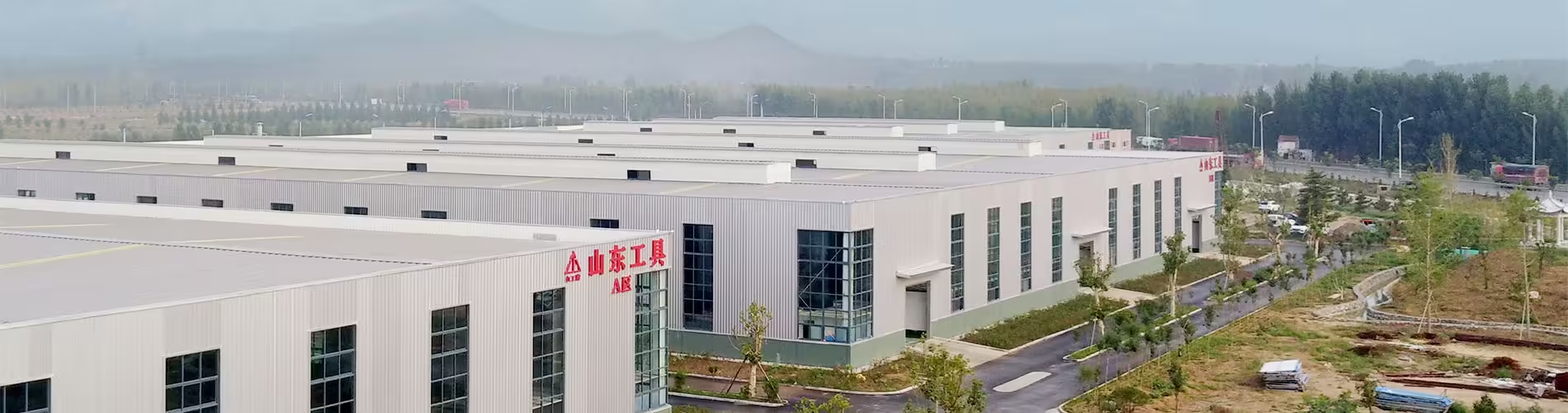
At Shandong Tool, we actively support the next generation through university partnerships, internship programs, and talent incubation projects. We welcome young minds who are willing to explore, challenge conventions, and bring fresh perspectives to an industry that is often underestimated.
To all young engineers: The tool industry may seem traditional on the surface, but it is undergoing a silent, powerful transformation. Your ideas, your skills, and your passion can shape the tools that build the future.



 English
  Russian
  German