

A alloy milling cutter is not just a catalog item; it is a process decision. In milling alloy steels and harder engineering materials, the wrong tool choice can create edge wear, heat buildup, and unstable cutting load. The right alloy milling cutter helps a shop control repeatability, protect tool life, and reduce inspection surprises. This guide is written for engineers, purchasing teams, and production managers who need a practical way to evaluate tooling before the next job reaches the machine.
The focus is decision support, not inflated claims. Cutting data still depends on machine condition, tool holding, coolant, workpiece material, and feature geometry. Use this guide to narrow the specification, ask better supplier questions, and connect the alloy milling cutter to measurable machining results. For neutral background on CNC methods, see numerical control.

Why alloy milling cutter Matters in Production
A alloy milling cutter matters most when a small process variable becomes expensive at batch scale. In alloy steel and mechanical components, a slight change in runout, chip evacuation, heat, or edge condition can change finish quality and dimensional consistency. A basic tool may pass one sample part, but a production run needs a tool that behaves predictably across repeated cycles.
That is why a alloy milling cutter should be reviewed with the holder, coolant, pre-machining condition, and inspection target. Tooling decisions made in isolation often lead to a familiar cycle: the operator slows the machine, quality still varies, and purchasing tries another tool without fixing the process.
When to Choose alloy milling cutter
Choose a alloy milling cutter when the part feature needs stable geometry, controlled chip behavior, and a repeatable finish. It is also useful when the shop wants to standardize a family of similar jobs instead of improvising tool choices each time. If the requirement is loose and the material is forgiving, a simpler general-purpose tool may still be enough.
The site?? Alloy Milling Cutter page is the closest product reference for this article. Review it alongside the part drawing, material specification, and machine setup. The best tool is usually the one that fits the whole workflow rather than the one that looks strongest in isolation.
Key Selection Criteria
Material and feature geometry
Start with material, feature depth, tolerance, and whether the cut is continuous or interrupted. A alloy milling cutter used in aluminum will usually be evaluated differently from one used in stainless steel, cast iron, or hardened components. Geometry should support chip flow and edge stability, not only nominal diameter or shape.
Holding and runout
Holding quality has a direct effect on the alloy milling cutter. Excessive runout can make one cutting edge do too much work, which often appears as chatter, poor finish, edge chipping, or size drift. Before blaming the tool, inspect holder cleanliness, projection length, spindle condition, and clamping consistency.
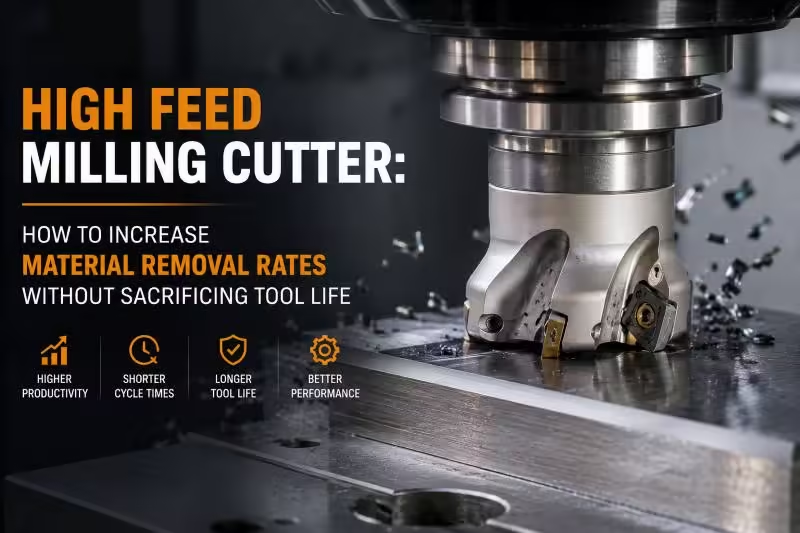
alloy milling cutter vs. Common Alternatives
| Option | Best Use | Watch Point |
|---|---|---|
| alloy milling cutter | milling alloy steels and harder engineering materials where repeatability and setup control matter | Requires correct holder, coolant, and process validation |
| HSS milling cutter | General work or less demanding features | May not deliver the same consistency in tighter jobs |
| Custom tool | Unusual geometry, difficult access, or high-volume repeat parts | Needs clear drawings and enough demand to justify customization |
This comparison is not about declaring one option universally better. It shows how the alloy milling cutter fits into a decision. If the feature is simple, the alternative may be economical. If repeatability, finish, or cycle stability is the real problem, the alloy milling cutter deserves stronger consideration.
Setup Practices That Improve Results
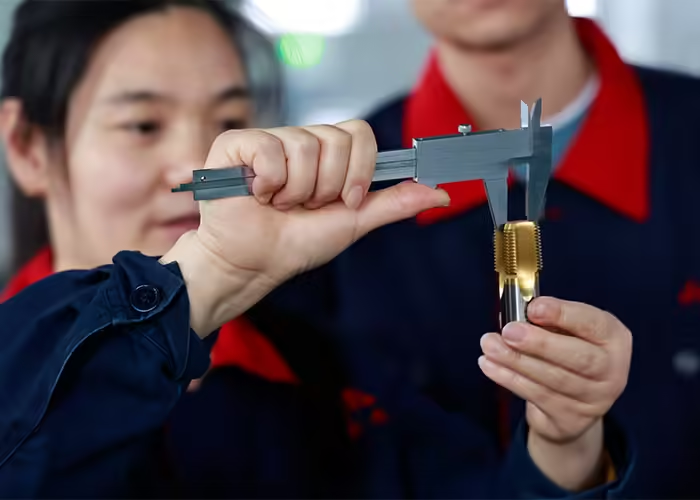
Good setup begins with clean contact surfaces, controlled projection, and a realistic first-piece inspection plan. A alloy milling cutter should be tested under the same conditions expected in production. If the first part is inspected carefully but later parts are not monitored, gradual wear or heat buildup can still escape attention.
Coolant access deserves early planning. Chips left near the cutting edge can scratch the work, trap heat, and shorten tool life. When chip evacuation is difficult, adjust feed strategy, coolant direction, and operation order before assuming the alloy milling cutter is unsuitable.
Troubleshooting Performance Issues
If the alloy milling cutter creates a rough finish, look at runout, edge wear, chip recutting, and coolant delivery. If the feature changes size across the batch, check heat, workholding, and whether the operator changed tool projection. If the tool fails suddenly, inspect for interrupted engagement, hard material spots, or a collision hidden in the setup history.
The most useful troubleshooting record includes the tool, holder, projection, coolant method, material batch, first-piece result, and failure mode. That evidence helps suppliers recommend a better alloy milling cutter or confirm that the existing choice is sound but the setup needs correction.
Procurement Checklist
- Confirm material, feature size, tolerance, depth, and batch volume.
- Match the alloy milling cutter to the machine interface and holder condition.
- Check overhang, runout, coolant access, and chip evacuation.
- Review whether a standard tool or custom tool is more practical.
- Measure first-piece results before committing to the full run.
- Record setup details for repeat orders and future purchasing.
FAQ
What is the main benefit of
The main benefit of this heavy-duty cutter is better control over a specific machining operation. It helps reduce variation when the machine, holder, coolant, and inspection plan are also managed correctly.
Can this heavy-duty cutter solve chatter by itself?
A this heavy-duty cutter can help, but chatter usually comes from the full setup. Check overhang, clamping, runout, workholding, and cutting conditions before changing only the tool.
How should buyers compare this heavy-duty cutter options?
Compare geometry, material compatibility, holder requirements, expected operation, and supplier support. A this heavy-duty cutter should be evaluated against the actual feature, not only catalog dimensions.
When should a custom version be considered?
Consider a custom version when the part has unusual access, combined features, high repeat volume, or a recurring quality issue that a standard this heavy-duty cutter cannot stabilize.
What information should be sent with an inquiry?
Send the work material, feature drawing, tolerance, machine type, holder style, current problem, and expected batch quantity. That context helps the supplier recommend a suitable this heavy-duty cutter.
Planning Resources
For heavy-duty alloy machining, these references help buyers compare edge strength, insert or cutter body stability, workholding limits, and inspection priorities.
- Relevant Shandong Tools product page
- Browse CNC cutting tools
- Related Shandong Tools technical blog
- Contact Shandong Tools for tooling support
- Cutting tool overview
- Machining process background
- CNC machining background
- Related machining topic reference
Final Recommendation
A this heavy-duty cutter performs best when it is selected as part of a complete process. Tool geometry matters, but so do holder condition, coolant, machine rigidity, and first-piece measurement. For shops trying to reduce rework or quote similar parts with more confidence, the this heavy-duty cutter should be evaluated through repeatability and setup stability, not just purchase cost.
If you are comparing tooling options for upcoming production, share the part material, drawing requirements, and current machining problem with Shandong Tools. The team can help review whether a standard this heavy-duty cutter is suitable or whether another CNC cutting tool would be more practical.


 English
  Russian
  German