

Table of Contents
Introduction
When it comes to machining operations, choosing the right alloy milling cutter is essential for achieving precision, efficiency, and superior surface finish. Whether you are performing roughing or finishing, understanding the differences in cutter design, material, and application can drastically impact your machining results.
In this guide, we will explore the key distinctions between roughing and finishing alloy milling cutters, offering insights to help you optimize your cutting operations.
Understanding Roughing and Finishing
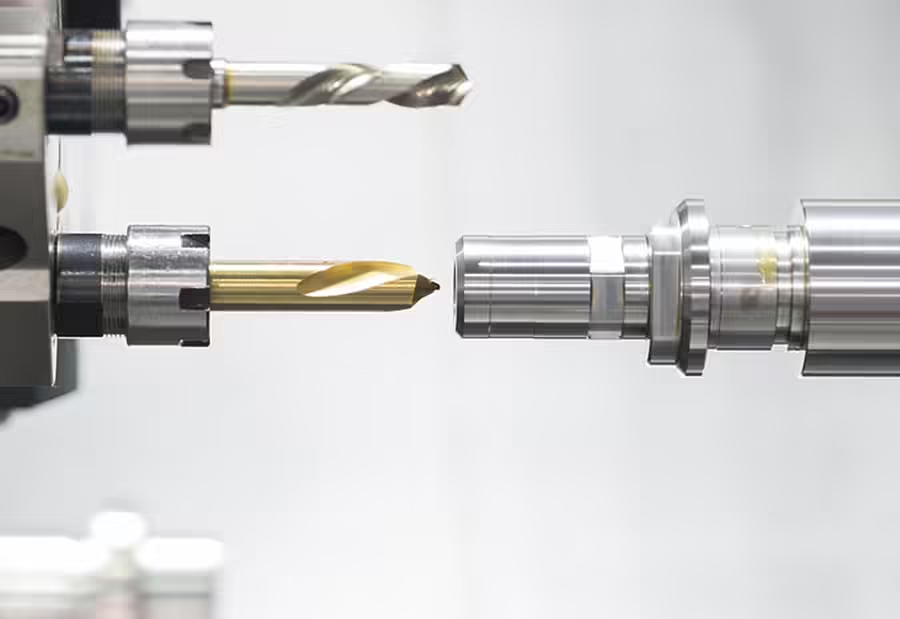
Roughing cutters are designed to remove large amounts of material quickly and efficiently. They typically have a higher number of teeth, stronger flutes, and are optimized for toughness to withstand heavy cutting loads.
Finishing cutters, on the other hand, prioritize precision and surface quality. They often have finer teeth and sharper edges to achieve smooth surfaces with minimal vibrations and tool marks.
| Feature | Roughing Alloy Milling Cutter | Finishing Alloy Milling Cutter |
|---|---|---|
| Primary Use | Rapid material removal | Achieving a smooth surface finish |
| Tooth Design | Fewer, stronger teeth | More, finer teeth |
| Cutting Load Capacity | High | Moderate |
| Surface Finish Quality | Lower | High |
| Feed Rate | High | Moderate |
| Recommended Material | Medium to hard alloys | Medium to soft alloys |
This comparison highlights the difference between roughing and finishing cutters, giving you a clear direction on which tool to use for your machining tasks.
Material Considerations
Choosing the right milling cutter material is just as important as deciding between roughing and finishing. Carbide milling cutters are a popular choice because they provide high hardness, wear resistance, and longer tool life compared to high-speed steel.
Industry reports show that carbide tools can last up to three times longer in medium-to-hard alloy machining compared to traditional tool steels, making them one of the best tools for alloy machining. This demonstrates why alloy milling cutter material selection should never be overlooked.
Selecting the Right Cutter for Your Operation
- Assess the Machining Goal: If your primary goal is rapid stock removal, choose a roughing cutter. For high-precision surfaces, a finishing cutter is essential.
- Match Cutter Material to Workpiece: Harder alloys require tougher cutter materials like carbide to maintain efficiency and reduce wear.
- Optimize Cutting Parameters: Adjust speed, feed, and depth of cut according to cutter type to prevent premature wear or tool failure.
- Evaluate Tool Life vs. Cost: While roughing cutters may cost less per unit, their higher wear in precision work can impact overall production costs.
| Cutter Type | Recommended Cutting Speed (m/min) | Recommended Feed (mm/tooth) | Typical Applications |
|---|---|---|---|
| Roughing | 80-150 | 0.1-0.3 | Heavy stock removal, bulk machining |
| Finishing | 150-250 | 0.05-0.15 | Surface finishing, precision parts |
This data provides a practical milling cutter cutting parameters guide, ensuring efficiency in different machining conditions.
Conclusion
The debate of roughing vs. finishing alloy milling cutter use isn’t about which is better-it’s about which is right for your application. Roughing cutters help maximize productivity during initial machining, while finishing cutters ensure precision and surface quality. By understanding cutter types, materials, and cutting parameters, you can significantly improve machining outcomes.
If you’re looking for expert guidance on alloy milling cutter selection, contact our team today-Shandong Tools. We specialize in delivering precision cutting solutions tailored to your production needs.
FAQ
What is the difference between roughing and finishing alloy milling cutters?
Roughing cutters are designed for rapid material removal with higher feed rates, while finishing cutters focus on achieving smooth surfaces with finer teeth and lower feed rates.
How do I select the right cutter material for roughing and finishing?
Base your choice on machining goals: use a roughing alloy milling cutter for bulk removal and a finishing cutter for final surface finishing.
Can I use a finishing cutter for roughing operations?
Using a finishing cutter for roughing is not recommended, as it may wear out quickly and fail under heavy cutting loads.
How can I maximize the lifespan of my alloy milling cutters?
Proper selection of cutter type, matching material to workpiece, optimizing cutting parameters, and regular maintenance can extend tool life and maintain consistent machining quality.
What are the typical applications for roughing and finishing cutters?
Roughing cutters are ideal for bulk material removal, while finishing cutters are used for high-precision surfaces, intricate components, and achieving superior surface finishes.


 English
  Russian
  German