

Table of Contents
Introduction
In the modern manufacturing world, selecting the right tools is paramount to achieving both precision and efficiency. Carbide milling cutters have become a staple in many industries due to their exceptional durability, cutting performance, and versatility. Whether you’re an experienced machinist or new to CNC machining, understanding the benefits, applications, and key considerations when choosing carbide milling cutters can help you elevate your work to the next level.
In this blog, we’ll delve into the different types of carbide milling cutters, their advantages, and how they can improve your machining processes. We’ll also take a closer look at the products offered by Shandong Tools, helping you make an informed choice for your manufacturing needs.

What is a Carbide Milling Cutter?
A carbide milling cutter is a cutting tool made from carbide, an extremely hard material that is far superior to traditional high-speed steel (HSS) in terms of wear resistance and longevity. These tools are designed for use in milling machines to remove material from a workpiece, creating specific shapes and sizes.
Carbide milling cutters come in a variety of types, including end mills, ball nose cutters, face mills, and reamers, each optimized for different milling operations. Due to their hardness, carbide cutters can operate at higher cutting speeds, maintain sharpness for longer, and offer superior performance when cutting tough materials.
Why Choose Carbide Milling Cutters?
1. Exceptional Durability
Carbide is one of the hardest materials available for cutting tools, offering exceptional wear resistance, even under extreme conditions. This makes carbide milling cutters last longer compared to traditional HSS cutters, reducing tool replacement frequency and lowering overall maintenance costs.
2. Higher Cutting Speeds
Carbide milling cutters can handle much higher cutting speeds than HSS tools, making them ideal for high-volume production. This efficiency not only speeds up machining time but also improves overall productivity by reducing cycle times.
3. Superior Precision and Surface Finish
One of the biggest advantages of carbide milling cutters is their ability to achieve high precision and smooth surface finishes. The hardness of carbide helps maintain sharp cutting edges, ensuring that the tool produces accurate, clean cuts with excellent surface quality, even at high speeds.
4. Versatility for a Range of Materials
Carbide milling cutters are versatile and can be used on a variety of materials, including both soft metals like aluminum and hard materials like stainless steel, titanium, and high-strength alloys. This makes carbide tools essential for many industries, from aerospace to automotive.
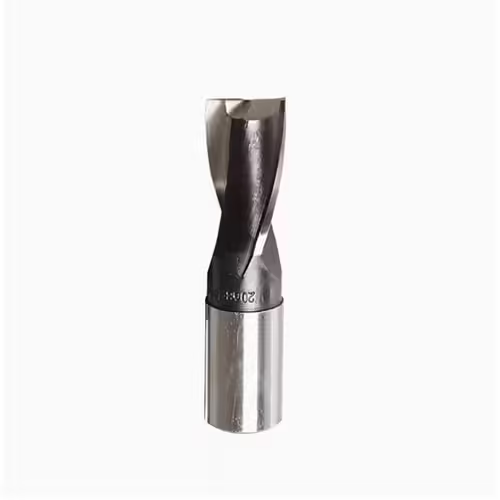
Shandong Tools: Your Trusted Partner in Carbide Milling Cutters
At Shandong Tools, we offer a comprehensive range of carbide milling cutters designed to meet the diverse needs of professionals across various industries. Our product offerings include:
- Solid Carbide End Mills: Ideal for roughing and finishing, these tools offer excellent wear resistance and a long tool life.
- Carbide Ball Nose End Mills: Perfect for 3D contouring and complex shapes, providing smooth finishes and high precision.
- Carbide Face Mills: Designed for heavy-duty cutting and large surface areas, making them ideal for rough cutting and material removal.
- Carbide Drills and Reamers: High-performance tools for precision drilling and reaming operations, capable of handling tough materials.
Choosing the Right Carbide Milling Cutter
To help you make an informed decision, we’ve compiled a comparison of some of the most common types of carbide milling cutters and their best applications. The table below summarizes the key features and benefits of each cutter type:
| Type of Cutter | Best For | Material Compatibility | Key Benefits | Common Applications |
|---|---|---|---|---|
| Solid Carbide End Mills | General milling and finishing | Aluminum, stainless steel, titanium, plastics | High wear resistance, long tool life | General machining, mold making |
| Carbide Ball Nose End Mills | 3D contouring, complex shapes | Steel, high-strength alloys, non-ferrous metals | Smooth finish, excellent for 3D shapes | Aerospace, mold & die manufacturing |
| Carbide Face Mills | Heavy-duty cutting and large surfaces | Steel, cast iron, aluminum | Fast material removal, multi-flute design | Heavy machining, roughing operations |
| Carbide Drills and Reamers | Precision drilling and reaming | Steel, stainless steel, titanium | High precision, excellent surface finish | Automotive, aerospace, and high-precision drilling |

How to Choose the Right Carbide Milling Cutter
Selecting the ideal carbide milling cutter involves considering several factors, including the material you’re working with, cutting conditions, and tool geometry.
1. Material to be Machined
The material being cut plays a significant role in choosing the right carbide cutter. For softer materials like aluminum, tools with higher flute counts and finer finishes work best. For harder materials like stainless steel or titanium, fewer flutes may be necessary to allow for better chip removal and longer tool life.
2. Cutting Conditions
Cutting speed, feed rate, and depth of cut all influence tool performance. Carbide milling cutters can handle higher cutting speeds than HSS cutters, but optimal cutting conditions must still be maintained to avoid premature wear or failure.
3. Tool Geometry
The geometry of the milling cutter affects the cutting action. For example, square end mills are ideal for general-purpose milling, while ball nose end mills are best for creating complex 3D shapes. Choosing the right cutter geometry will ensure better performance and a more efficient machining process.
4. Coatings and Treatments
Some carbide milling cutters come with coatings such as TiN (Titanium Nitride), TiAlN (Titanium Aluminum Nitride), or DLC (Diamond-Like Carbon), which enhance wear resistance, reduce friction, and increase tool life. If you’re working with tough materials or need higher speeds, choosing a coated cutter may be beneficial.
Conclusion
Carbide milling cutters are essential tools in modern machining due to their exceptional durability, cutting speed, and precision. Whether you’re machining soft metals or hard alloys, these cutters offer outstanding performance and longevity, ensuring your projects meet the highest standards of quality and efficiency.
At Shandong Tools, we offer a broad selection of carbide milling cutters to meet your needs. Our tools are designed to provide maximum productivity and precision, helping you achieve superior results in every operation.
FAQ
What materials are best suited for carbide milling cutters?
Carbide milling cutters are perfect for cutting hard materials like stainless steel, titanium, high-strength alloys, and also soft materials like aluminum and brass.
How can I maximize the lifespan of my carbide milling cutter?
To extend the life of your carbide cutter, make sure you’re using the correct cutting speeds, feed rates, and depths for the material you’re machining. Proper coolant use is also essential to minimize heat buildup.
Are carbide milling cutters compatible with all CNC machines?
Yes, carbide milling cutters are compatible with most CNC machines, but ensure your machine can handle the higher cutting speeds required by carbide tools.
Can carbide milling cutters be re-sharpened?
Yes, carbide milling cutters can be re-sharpened, but this requires specialized equipment. Re-sharpening can extend the tool’s life but may not restore it to its original sharpness.


 English
  Russian
  German