

Table of Contents
Introduction
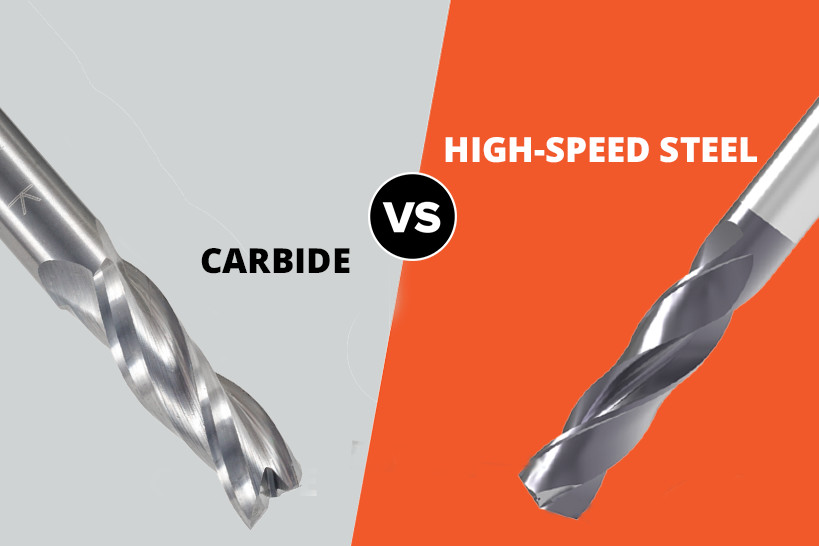
When it comes to CNC machining, one of the most common debates among manufacturers and engineers is carbide vs HSS cutting tools. Both materials have their strengths, and understanding their differences can help you optimize performance, tool life, and production costs. Selecting the right cutting tool material directly affects the surface finish, machining efficiency, and overall profitability of your operation.
This guide explores the key distinctions between carbide and HSS cutting tools, their applications, and how to choose the right one for your specific CNC machining needs.
What Are HSS and Carbide Cutting Tools?
High-Speed Steel (HSS) is an alloy steel known for its toughness and ability to retain hardness at moderate temperatures. HSS tools are versatile, affordable, and easy to resharpen, making them ideal for general-purpose machining.
Carbide cutting tools, on the other hand, are made from tungsten carbide particles bonded with cobalt. They are significantly harder and more heat-resistant than HSS, capable of maintaining sharp cutting edges even under high-speed conditions.
| Property | HSS Cutting Tools | Carbide Cutting Tools |
|---|---|---|
| Hardness | Moderate (Rockwell ~65 HRC) | Very high (Rockwell ~90 HRC) |
| Heat Resistance | Up to 600°C | Up to 1000°C |
| Cutting Speed | Medium | High |
| Wear Resistance | Moderate | Excellent |
| Cost | Lower | Higher |
| Regrind Capability | Easy | Limited |
| Typical Use | General machining | High-speed, precision machining |
Performance Differences in CNC Applications
Carbide cutting tools excel in high-speed, precision CNC operations. They allow for faster cutting speeds, reduced cycle times, and superior dimensional accuracy. However, they are more brittle than HSS and can chip under unstable conditions.
HSS tools, while slower, are tougher and more forgiving when cutting harder materials or under interrupted cutting conditions. They remain a cost-effective choice for smaller runs, repair work, or setups requiring frequent tool changes.
According to Modern Machine Shop Magazine, switching from HSS to carbide can increase machining speeds by up to 400% and extend tool life by three to five times, especially in automated CNC environments.

Cost Efficiency: Short-Term vs Long-Term Value
While HSS tools are less expensive initially, carbide cutting tools often deliver a better return on investment over time. Their longer lifespan, reduced downtime, and higher feed rates lead to lower total machining costs.
| Factor | HSS Tools | Carbide Tools |
|---|---|---|
| Initial Cost | Low | High |
| Tool Life | Short | Long |
| Cutting Speed | Moderate | Fast |
| Machining Cost per Part | Higher | Lower |
| Best For | Small batch, manual machining | Large-scale, CNC production |
For high-volume CNC machining, carbide tools clearly offer better long-term value despite their higher upfront cost.
Applications and Material Suitability
- HSS Cutting Tools are ideal for softer materials such as mild steel, aluminum, or brass, and for applications where flexibility and toughness matter.
- Carbide Cutting Tools are preferred for hard materials such as stainless steel, titanium, or cast iron, where heat resistance and wear protection are critical.
Choosing between carbide vs HSS cutting tools depends on balancing material hardness, cutting speed, and required surface finish.
Tool Geometry and Coating Considerations
Both HSS and carbide tools benefit from optimized geometry and surface coatings.
- Coatings like TiN, TiCN, and AlTiN can enhance tool life and cutting performance.
- Carbide tools often feature sharper edges and advanced coatings designed for high-speed, dry cutting conditions.
- HSS tools can be customized easily, allowing flexibility in complex geometries.
Maintenance and Regrinding
HSS cutting tools are easier and cheaper to regrind, extending their service life in small-scale operations. Carbide tools, though harder to resharpen, typically maintain their sharpness much longer, reducing maintenance frequency.
Regular inspection for wear, chip buildup, and cutting edge rounding ensures consistent performance and prevents tool breakage in CNC machining.

Environmental and Production Impact
Using carbide tools can reduce energy consumption per machined part due to faster cutting speeds and fewer tool changes. HSS tools, being more recyclable, contribute to sustainability when used in moderate-speed applications. Both materials can be reprocessed, supporting greener manufacturing practices.
Conclusion
The debate of carbide vs HSS cutting tools ultimately comes down to your machining goals. If your operation focuses on precision, speed, and long-term efficiency, carbide tools are the best choice. However, if cost control, toughness, and flexibility are priorities, HSS remains a reliable option.
Shandong Tool provides both HSS and carbide cutting tools designed for modern CNC machining applications. Whether you need standard or custom tool solutions, our technical team can help you choose the best option for your production needs.
Contact us today to find out which cutting tool solution fits your process.
FAQ
Q1: What is the main difference between carbide and HSS cutting tools?
Carbide tools are harder and more heat-resistant, while HSS tools are tougher and more affordable.
Q2: When should I use HSS cutting tools?
HSS is ideal for low-speed, general-purpose machining or when cost is a primary concern.
Q3: Are carbide tools always better than HSS tools?
Not necessarily. Carbide excels at high-speed CNC machining, but HSS performs better in interrupted or low-stability operations.
Q4: How long do carbide cutting tools last compared to HSS?
Carbide tools can last up to five times longer than HSS, depending on conditions and material.
Q5: Can both carbide and HSS tools be resharpened?
Yes, but HSS tools are easier to regrind, while carbide requires specialized equipment.


 English
  Russian
  German