

Table of Contents
Introduction
Custom CNC cutting tools are often the best choice when standard tools cannot meet your machining accuracy, efficiency, or tool life requirements. In many production environments, manufacturers face special materials, complex part shapes, tight tolerances, or repeated high-volume operations. Using standard tools in these cases may lead to longer cycle times, poor surface finish, frequent tool changes, and higher production costs.
This guide explains when to choose custom CNC cutting tools, what benefits they provide, and how they help manufacturers improve machining performance. If your current tools are limiting production efficiency, this article will help you decide whether a custom tool solution is worth considering.
What Are Custom CNC Cutting Tools?
Custom CNC cutting tools are specially designed tools made according to a specific machining requirement. Unlike standard tools, which are produced in fixed sizes and geometries, custom tools can be adjusted in diameter, length, flute design, coating, cutting angle, material grade, and overall structure.
They are commonly used for milling, drilling, threading, reaming, boring, chamfering, and special profile machining. The main purpose is simple: to make the tool match the part, material, and machine process more precisely.
When Should You Choose Custom CNC Cutting Tools?
Custom CNC cutting tools are especially useful when standard tools cause repeated problems or cannot achieve the required production result.
Common situations include:
- The part has a special profile or complex geometry.
- Standard tools require too many machining steps.
- Tool life is too short in high-volume production.
- Surface finish or tolerance is difficult to control.
- The material is hard to machine.
- Cycle time needs to be reduced.
- A single combined tool can replace multiple standard tools.
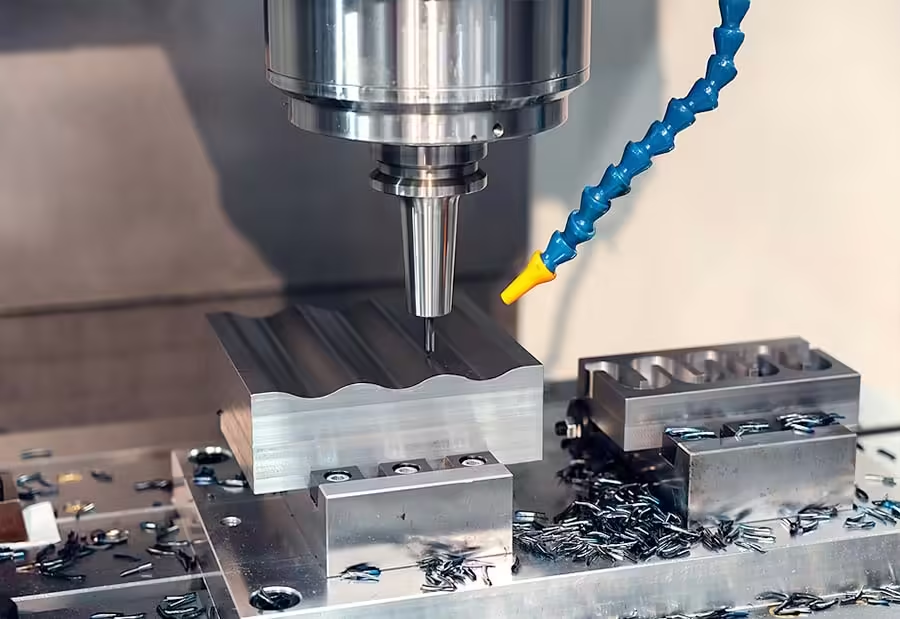
For example, if one part requires drilling, chamfering, and countersinking, a custom combination tool can complete multiple operations in one pass. This reduces tool changes, shortens machining time, and improves consistency.
Custom CNC Cutting Tools vs Standard Tools
| Item | Standard CNC Cutting Tools | Custom CNC Cutting Tools |
|---|---|---|
| Tool Design | Fixed size and geometry | Designed for specific application |
| Initial Cost | Lower | Higher |
| Production Efficiency | Suitable for general machining | Better for repeated or complex machining |
| Tool Life | Depends on standard design | Can be optimized for longer life |
| Machining Steps | May require multiple tools | Can combine multiple functions |
| Best For | Small batches, general parts | High-volume, precision, or special parts |
Standard tools are still useful for many general machining tasks. However, when the same machining problem appears repeatedly, custom CNC cutting tools often provide better long-term value.
Key Benefits of Custom CNC Cutting Tools
Improved Machining Efficiency
A custom tool can be designed to match the exact machining process. This reduces unnecessary tool changes, shortens cycle time, and improves machine utilization.
For production managers, this means faster output and better delivery stability.
Longer Tool Life
Tool life depends on material grade, cutting edge design, coating, and chip evacuation. Custom CNC cutting tools can be optimized for the exact workpiece material and cutting condition, helping reduce wear and breakage.
Better Surface Finish
When tool geometry matches the workpiece and machining process, cutting becomes more stable. This helps reduce vibration, tool marks, burrs, and surface defects.
Lower Cost Per Part
Although custom CNC cutting tools usually cost more at the beginning, they can reduce the cost per part by improving tool life, reducing downtime, and lowering scrap rates.
More Stable Quality
For repeated production, consistency is critical. Custom tools help keep dimensions, surface finish, and machining results more stable across batches.
What Can Be Customized?
Custom CNC cutting tools can be customized in many ways, including:
- Tool diameter
- Cutting length
- Overall length
- Number of flutes
- Helix angle
- Rake angle
- Point angle
- Coating type
- Carbide grade
- Chip breaker design
- Special profile shape
- Combined tool structure
A good custom tool design should not only match the drawing, but also consider machine rigidity, spindle speed, coolant condition, clamping method, and production volume.
Materials Used for Custom CNC Cutting Tools
Common tool materials include solid carbide, high-speed steel, cobalt alloy, CBN, and PCD. For most high-precision CNC machining applications, solid carbide is widely preferred because it offers high hardness, heat resistance, and long tool life.
For non-ferrous materials, PCD tools may be selected. For hardened steel, CBN tools may be more suitable. The right choice depends on your workpiece material, tolerance requirement, and production scale.
How to Request Custom CNC Cutting Tools
To design a suitable custom CNC cutting tool, a supplier usually needs the following information:
| Required Information | Why It Matters |
|---|---|
| Workpiece material | Determines tool material and coating |
| Part drawing | Defines tool geometry and profile |
| Machining process | Helps optimize tool structure |
| Machine type | Ensures tool compatibility |
| Current tool problem | Identifies improvement direction |
| Target tool life | Helps balance cost and performance |
| Production volume | Determines whether custom tooling is cost-effective |
The more detailed your information is, the more accurate the tool recommendation will be.
Common Mistakes When Choosing Custom CNC Cutting Tools
One common mistake is only focusing on tool price. A cheaper tool may look attractive, but if it wears quickly or causes downtime, the real cost becomes much higher.
Another mistake is copying a standard tool design and calling it “custom.” A true custom CNC cutting tool should be engineered around the actual machining condition.
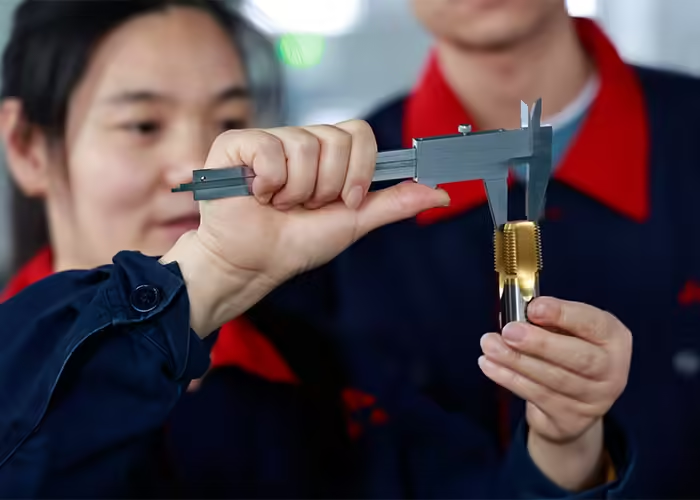
It is also important not to ignore testing. Before full production, sample testing helps confirm tool life, surface finish, and dimensional stability.
Who Needs Custom CNC Cutting Tools?
Custom CNC cutting tools are suitable for:
- CNC machining factories
- Automotive parts manufacturers
- Mold and die manufacturers
- Precision component suppliers
- Machinery manufacturers
- Metal parts processing plants
- High-volume production workshops
- Companies machining special materials
If your production requires stable quality, repeated processing, or reduced cycle time, custom tools can provide strong value.
FAQ
What are custom CNC cutting tools?
Custom CNC cutting tools are specially designed tools made for specific machining requirements, materials, or part geometries.
Are custom CNC cutting tools more expensive?
The initial cost is usually higher, but they can reduce total production cost by improving tool life and machining efficiency.
When should I use custom CNC cutting tools?
You should consider custom tools when standard tools cannot meet accuracy, efficiency, surface finish, or tool life requirements.
Can custom CNC cutting tools combine multiple operations?
Yes. A custom tool can combine drilling, chamfering, countersinking, or profiling to reduce tool changes and cycle time.
How do I get a custom CNC cutting tool quotation?
You can provide your workpiece material, part drawing, machining process, current tool problem, and target performance requirements.
Conclusion
Custom CNC cutting tools are not just special tools; they are practical solutions for improving machining efficiency, quality stability, and production cost control. When standard tools cannot solve repeated machining problems, custom tooling can help manufacturers reduce cycle time, extend tool life, and achieve better surface finish.
Shandong Tool provides custom CNC cutting tools, standard cutting tools, milling cutters, drill bits, tapping tools, reamers, and tool holders for different machining applications. If you need a tool designed for your material, drawing, or production process, contact us today. Our technical team can help you evaluate your application and recommend a suitable custom tool solution.


 English
 Russian
 German