

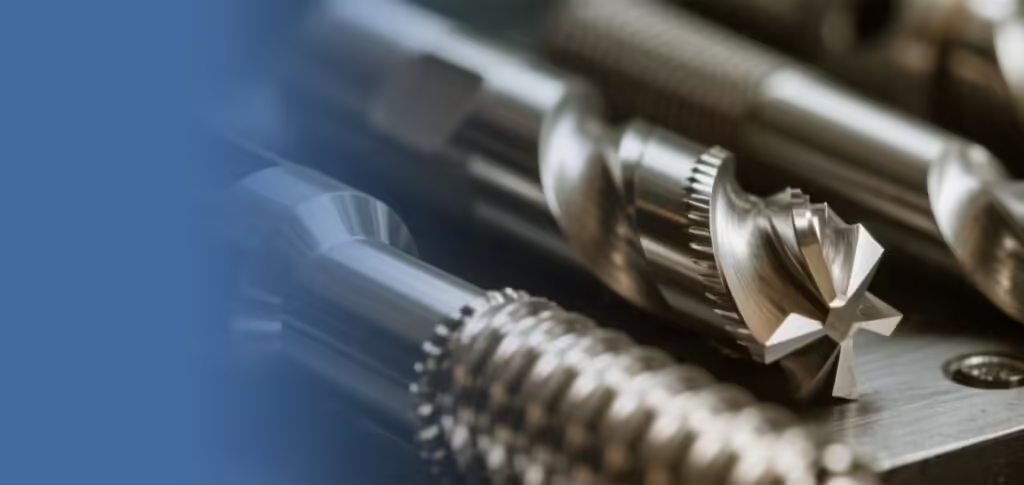
In the world of precision manufacturing, the choice between custom and standard cutting tools can have a significant impact on efficiency, quality, and your bottom line. Whether you’re working in aerospace, automotive parts, or general machine tool manufacturing, understanding the differences is key. This guide will explore the debate between custom and standard cutting tools, helping you determine which solution best suits your project requirements.
Table of Contents
Understanding the Basics: Standard Cutting Tools
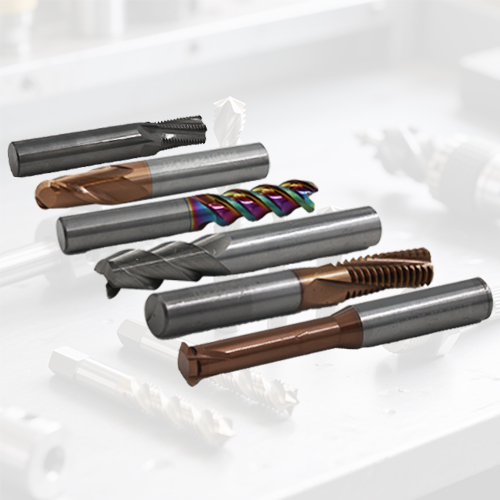
Standard cutting tools are off-the-shelf, mass-produced instruments designed for a wide range of common machining applications. They are versatile and readily available, making them the go-to choice for many workshops.
These tools encompass a vast array of products, including:
. Drilling Tools: Such as twist drills and center drills for creating and centering holes.
. Milling Cutters: Including end mills and keyway cutters for slotting, profiling, and shaping workpieces.
. Threading Tools: A comprehensive range of taps for creating internal threads.
. Turning Tools: Often utilizing replaceable carbide inserts for high-speed machining on lathes.
Companies with extensive experience, sometimes spanning over 60 years, have perfected the production of these tools to meet global demands. Standard tools like solid carbide end mills, HSS machine taps, and reamers are designed for high performance across various materials like steel, cast iron, and aluminum.
The Case for Custom Cutting Tools
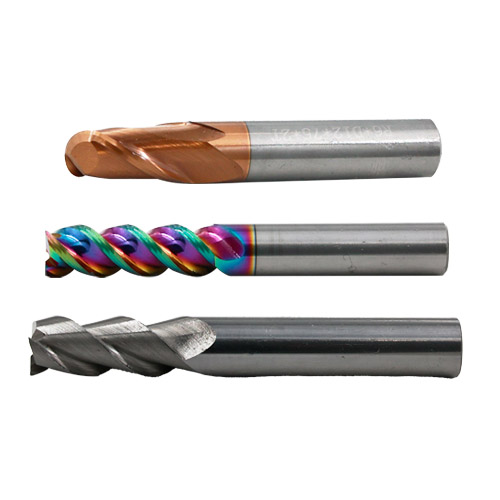
While standard tools cover many bases, some projects demand a more tailored solution. Custom, or non-standard, cutting tools are specifically designed and manufactured for a unique application, material, or machine setup.
This is where manufacturers specializing in non-standard tools excel. Customization is essential when:
. Complex Geometries are Required: The aerospace and precision mold industries often deal with intricate parts that standard tools cannot produce efficiently.
. Unique Materials are Machined: Processing challenging materials, like the titanium alloys used in aerospace, may require a tool with specific coatings, geometry, and material composition to ensure stability and extend tool life.
. Production Efficiency is Critical: In high-volume sectors like automotive parts, a custom tool can combine multiple operations into one, significantly reducing cycle times and the number of tool changes. A customer in the automotive industry noted that custom tools for engine block processing reduced tool changes and offered stable tool life.
Custom vs. Standard Cutting Tools: A Head-to-Head Comparison
To make an informed decision, let’s compare these two options directly.
| Feature | Standard Cutting Tools | Custom Cutting Tools |
| Availability | Immediately available off-the-shelf. | Made to order; requires lead time for design and manufacturing. |
| Cost | Lower upfront cost due to mass production. | Higher initial investment due to specialized design and manufacturing. |
| Performance | Good for general-purpose applications across various materials. | Optimized for a specific task, delivering superior precision, efficiency, and tool life. |
| Application | Ideal for common machining tasks in machine tool manufacturing and general engineering. | Best for specialized, high-precision, or high-volume production, such as in aerospace, automotive parts, and precision molds. |
| Versatility | Highly versatile and can be used for multiple jobs. | Designed for one specific purpose, offering limited versatility. |
Conclusion
The decision in the custom vs. standard cutting tools debate ultimately depends on your specific needs.
Standard cutting tools are the workhorses of the industry, offering a reliable and cost-effective solution for a wide variety of tasks. For general machining, prototyping, or low-volume jobs, their availability and versatility are unmatched.
However, for specialized applications that demand the highest levels of precision, efficiency, and performance, investing in a custom tool is often the better long-term strategy. The initial cost is offset by improved part quality, longer tool life, and reduced production time, as seen in demanding fields like aerospace and automotive manufacturing.
Working with an experienced manufacturer that offers both a wide range of standard products and non-standard customized tools ensures you get the perfect solution for any challenge.
FAQ
What are non-standard tools?
Non-standard tools, also known as custom tools, are cutting tools that are specially designed and manufactured to meet the unique requirements of a specific machining operation, part, or material. They are not available off-the-shelf.
When should I choose a custom cutting tool over a standard one?
You should consider a custom tool when you are working with complex part geometries, machining difficult materials like titanium alloys, or need to improve efficiency in high-volume production, such as in the automotive or aerospace industries.
Are custom tools more expensive than standard tools?
Yes, custom tools typically have a higher upfront cost due to the design, engineering, and specialized manufacturing processes involved. However, they can provide a better return on investment through increased productivity, improved part quality, and longer tool life.
What types of standard cutting tools are commonly available?
Commonly available standard tools include a wide variety of CNC cutting tools, solid carbide tools, milling cutters, twist drills, reamers, taps, and carbide inserts.
Can a single manufacturer provide both standard and custom tools?
Yes, professional CNC tool manufacturers with extensive experience often provide a wide range of standard products and also offer services for creating non-standard, customized tools to meet specific customer needs.


 English
  Russian
  German