

Table of Contents
Introduction
CNC tool holders are one of the most critical components in any machining operation. They serve as the connection between the cutting tool and the spindle, directly affecting precision, stability, and repeatability. A properly selected tool holder ensures minimal runout, reduced vibration, and consistent cutting performance. Conversely, poor-quality or mismatched holders can lead to tool failure, dimensional errors, and decreased productivity.
This comprehensive guide will cover the types of CNC tool holders, detailed selection criteria for different applications, and best practices for maintenance. Whether you are machining high-precision aerospace components, automotive parts, or complex molds, understanding tool holders is essential for achieving maximum performance, tool longevity, and cost efficiency.
Why CNC Tool Holders Are Essential
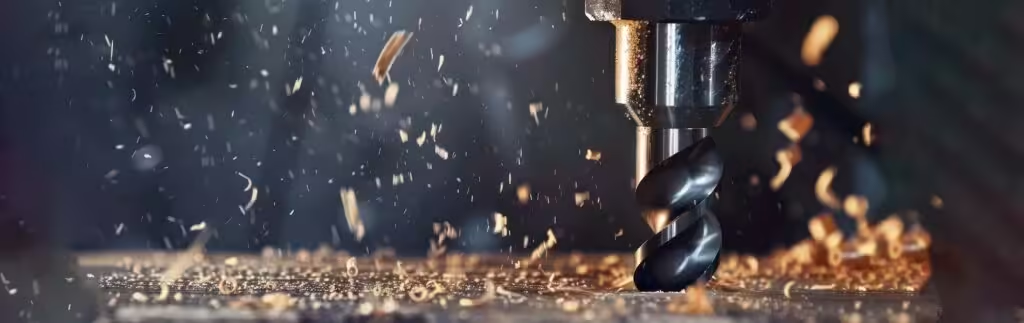
Tool holders may seem like a secondary component, but they play a pivotal role in CNC machining quality and efficiency. Poor-quality or inappropriate holders can cause tool runout, vibration, premature wear, and scrap. High-quality tool holders ensure accurate positioning, stable machining at high speeds, and consistent surface finish. Investing in the right tool holder improves machining efficiency, consistency, and overall cost-effectiveness.
Types of CNC Tool Holders
Collet Chucks
Collet chucks are versatile holders widely used in milling, drilling, and reaming. They provide uniform clamping force around the tool shank, minimizing runout and vibration. Collet chucks are effective for high-speed, high-precision applications and are ideal for short tools and small-diameter end mills. Collet chucks are easy to change, offer high accuracy, and are suitable for small to medium diameters. However, they may not handle heavy cutting forces as well as hydraulic or shrink fit holders.
Hydraulic Chucks
Hydraulic chucks use fluid pressure to grip the tool, offering superior clamping accuracy and minimal runout. They excel at vibration damping and are ideal for high-speed machining of hard materials where precision and tool life are critical. Hydraulic holders provide exceptional concentricity and are excellent for finishing operations. They are more expensive than collet chucks and require maintenance of the hydraulic system.
Shrink Fit Holders
Shrink fit holders rely on thermal expansion to secure the tool shank. Heating the holder expands its diameter; after inserting the tool and cooling, the tool is held with high precision and clamping force. Shrink fit holders are particularly suited for fine finishing, high-speed milling, and precision applications. They offer extremely low runout and high clamping force, making them ideal for long tools. The downside is that frequent tool changes require specialized equipment.
End Mill Holders
End mill holders use a set screw or side-lock mechanism to secure tools with a flat shank. They are simple, cost-effective, and widely used for general-purpose milling. End mill holders are easy to install and replace, but they provide less precision than hydraulic or shrink fit holders, and runout can be slightly higher.
Modular Tool Holders
Modular tool holders consist of a base holder and interchangeable modules for different tools. They are ideal for production environments that require quick tool changes without dismounting the main holder. Modular holders improve machine utilization and reduce downtime. They are highly flexible, but they have a higher initial cost and require more careful maintenance.
CNC Tool Holder Comparison Table
| Holder Type | Accuracy | Tool Change Speed | Best Application | Cost Level | Maintenance Requirement |
|---|---|---|---|---|---|
| Collet Chuck | Medium-High | Fast | General milling, drilling | Low-Medium | Low |
| Hydraulic Chuck | Very High | Medium | High-speed finishing, hard metals | High | Medium |
| Shrink Fit Holder | Very High | Slow | Precision milling, long tools | High | Medium |
| End Mill Holder | Medium | Fast | General milling, roughing | Low | Low |
| Modular Holder | High | Very Fast | Production environments, mixed tools | High | Medium |
This table allows users to quickly compare holder types based on accuracy, cost, speed, and application suitability.
How to Select the Right CNC Tool Holder
Match the Tool Shank Type
Ensure the holder is compatible with your tool shank—round, Weldon, or Morse taper—to provide stable clamping and reduce runout. Incorrect matching can cause tool wobble, poor surface finish, and faster wear.
Consider Machining Requirements
High-speed finishing requires hydraulic or shrink fit holders for minimal runout. Roughing operations are better suited for collet or end mill holders with stronger clamping force. High-volume production benefits from modular holders, which reduce downtime and improve throughput.
Material and Build Quality
Tool holders are typically made from hardened steel or high-grade alloy. Precision machining and heat treatment improve durability, reduce vibration, and extend service life. Avoid low-quality holders, as they can compromise tool life and surface finish.
Spindle Interface Compatibility
Check your CNC spindle type, whether CAT, BT, or HSK. Using the correct interface ensures secure mounting and precise tool alignment. HSK holders provide higher precision at high speeds, while CAT and BT are commonly used in general machining with good stability.
Maintenance Tips for CNC Tool Holders
Regular cleaning of holders removes chips, dust, and coolant residues to prevent corrosion and ensure proper clamping. Inspect taper surfaces, threads, and collets for wear or damage, and replace worn components promptly. Apply light anti-corrosion oil to prevent rust. Store holders in racks or protective cabinets to prevent accidental damage. Rotate tool holders across tools to distribute wear evenly and prolong service life. Proper maintenance extends tool life, protects cutting tools, and improves machining quality.
Recommended Practices for Maximizing Performance
Use holders that match the machining operation and material type. Avoid overloading holders with long or heavy tools unless designed for it. Monitor spindle runout and holder alignment periodically. Replace collets, shrink fit inserts, or modular components at the first sign of wear. Train operators to handle tool holders carefully during setup and changes. Following these practices reduces downtime, extends tool life, and maintains consistent part quality.
Advantages of Proper Tool Holder Selection and Maintenance
Selecting the right tool holder reduces vibration and chatter for better surface finish, extends tool life, enables higher spindle speeds and feed rates, ensures consistent part quality and tight tolerances, lowers scrap rates, and reduces overall production costs. Proper tool holder selection is an investment in efficiency, quality, and profitability.
FAQ
What tool holder provides the highest accuracy?
Hydraulic and shrink fit holders generally offer the lowest runout and best clamping precision, ideal for high-speed, high-precision machining.
Can one holder type accommodate multiple tools?
Yes, modular holders allow quick tool changes and can handle different tool types efficiently.
How often should tool holders be inspected?
Weekly inspections or after heavy use are recommended to detect wear, debris, or damage early.
Does the holder type affect cutting tool life?
Absolutely. Proper holders reduce vibration, prevent tool deflection, and ensure consistent cutting forces, extending tool life.
What is the difference between CAT, BT, and HSK holders?
These refer to spindle interface standards. HSK provides the highest precision at high speeds, while CAT and BT are widely used in general applications with good stability.
Conclusion
CNC tool holders are a critical component in machining precision and efficiency. Selecting the right holder and maintaining it properly ensures high-quality machining, longer tool life, and reduced production costs. At Shandong Tool, we offer a wide range of high-quality CNC tool holders, including collet, hydraulic, shrink fit, end mill, and modular holders, along with expert guidance to optimize your machining operations. Contact us today to select the ideal CNC tool holder for your production needs and ensure your tools and machines operate at peak performance.


 English
  Russian
  German