

Table of Contents
Introduction
Carbide cutting tools are a cornerstone of modern CNC machining. Their hardness, heat resistance, and precision make them indispensable for industries ranging from aerospace to automotive and high-precision manufacturing. However, not all carbide cutting tools perform equally. Selecting the right carbide tool is the key to maximizing tool life, reducing production costs, and ensuring consistent part quality. In this article, we will explore how to choose carbide cutting tools based on material grade, coatings, geometry, and application conditions, while providing practical tips to extend tool life. Whether you are producing high-precision parts, machining aluminum, steel, or specialty alloys, this guide will help you make informed decisions and boost production efficiency.

Why Carbide Tool Selection Matters
Carbide is extremely hard and capable of maintaining sharp cutting edges under high speeds and temperatures. However, improper selection can lead to premature tool wear or breakage, poor surface finish, frequent tool changes, and higher production costs. Using the right carbide tool ensures stable cutting performance, longer tool life, improved surface finish, tighter tolerances, and increased spindle speed and feed rate capability. Carbide selection directly impacts production efficiency, quality consistency, and profitability.
Types of Carbide Cutting Tools
Solid Carbide End Mills
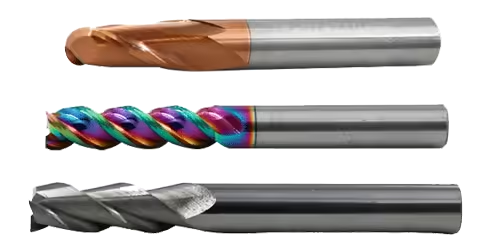
Solid carbide end mills are highly suitable for high-speed, precision CNC milling. They maintain sharp edges even under heat and heavy cutting forces. Polished flutes and variable helix designs further minimize chip adhesion and vibration, making them ideal for finishing and high-precision operations.
Carbide Inserts
Carbide inserts are replaceable tips used in turning, grooving, and milling. They allow fast replacement without regrinding, reducing downtime and tooling costs. Inserts are versatile and can be optimized for different materials with proper coatings.
Carbide Drills and Twist Drills
For high-speed drilling of metals, carbide drills provide superior wear resistance and precise hole quality. Selecting the correct point angle and flute design ensures minimal burr, improved concentricity, and longer tool life.
Carbide Router Bits
Used for aluminum, plastics, and composite materials, carbide router bits offer excellent surface finish and durability. They are ideal for sheet processing or complex 2D contours, ensuring minimal burring and high productivity.
Factors Affecting Carbide Tool Life
Material Grade
Carbide tools come in different grades, balancing hardness and toughness. Fine-grain carbide offers very high hardness and wear resistance, suitable for finishing and high-precision milling. Coarse-grain carbide has higher toughness, ideal for roughing, interrupted cuts, or heavy-duty machining.
Coatings
Tool coatings improve wear resistance, reduce friction, and prevent adhesion of workpiece material. Common coatings include TiAlN for high-temperature resistance, AlTiN for aggressive machining and hardened metals, and DLC/TiB2 to prevent aluminum or non-ferrous metal adhesion while improving surface finish.
Geometry and Design
Proper geometry affects tool life significantly. Positive rake angles reduce cutting forces and heat generation. Helix angles between 30° and 45° enhance chip evacuation and surface finish. Polished flutes reduce material sticking and allow smoother cutting. Corner radius prevents chipping and extends tool longevity.
Application Conditions
Tool life also depends on cutting conditions such as workpiece material hardness and machinability, spindle speed, feed rate, depth of cut, machine rigidity, and coolant use. Selecting the right combination of material, coating, and geometry maximizes performance and tool life.
Recommended Cutting Parameters for Long Tool Life
| Workpiece Material | Tool Type | Coating | Spindle Speed | Feed Rate | Depth of Cut |
|---|---|---|---|---|---|
| Aluminum | Solid carbide end mill | TiB2 or DLC | 12,000–20,000 RPM | 0.05–0.2 mm/tooth | 0.5–3 mm |
| Stainless steel | Coated carbide | TiAlN | 6,000–12,000 RPM | 0.03–0.1 mm/tooth | 0.5–2 mm |
| Titanium alloys | Solid carbide | AlTiN | 4,000–8,000 RPM | 0.02–0.08 mm/tooth | 0.3–1.5 mm |
| Mild steel | HSS or coated carbide | TiN | 8,000–15,000 RPM | 0.05–0.15 mm/tooth | 0.5–4 mm |
These parameters are guidelines; tool life can be further extended by optimizing machine setup, coolant strategy, and operator practices.
Common Mistakes to Avoid
Using uncoated tools for high-speed operations, selecting brittle carbide grades for roughing or unstable machines, ignoring chip evacuation and flute design, overlooking coolant or lubrication needs, and failing to inspect tools regularly for wear can all reduce tool life. Avoiding these mistakes ensures longer tool life, better surface finish, and consistent production quality.
Advantages of Choosing the Right Carbide Cutting Tools
Extended tool life reduces downtime and tooling costs. Stable cutting performance ensures consistent quality. Higher feed rates and spindle speeds increase production efficiency. Optimized coatings prevent adhesion and improve finish. Reduced scrap and improved dimensional accuracy. Selecting the right carbide tool is not just about cutting speed—it’s about maximizing return on investment in CNC machining operations.
Conclusion
Choosing the right carbide cutting tools for long life is essential to achieving high productivity, consistent quality, and cost efficiency. By carefully considering material grade, coating, geometry, and machining conditions, manufacturers can significantly reduce downtime, extend tool life, and improve part quality. At Shandong Tool, we specialize in high-performance carbide cutting tools tailored to your CNC machining needs. Contact us today to consult with our tooling experts and optimize your production efficiency with the right tools.
FAQ
What carbide tools last the longest?
Fine-grain solid carbide with appropriate coatings (TiAlN or AlTiN) performs best for high-speed precision operations.
Do coatings really improve tool life?
Yes, coatings reduce friction, heat, and material adhesion, which significantly extends tool life.
Can HSS tools compete with carbide?
HSS offers toughness and impact resistance for low-speed operations, but carbide is superior for high-speed CNC machining.
Which geometry is best for long life?
Positive rake angles, polished flutes, and corner radii improve chip evacuation, reduce vibration, and prevent chipping.
Is coolant necessary for carbide tools?
Coolant helps extend tool life, but advanced coated carbide tools can often run dry in suitable applications.

 English
  Russian
  German