

Table of Contents
Introduction
Drill bit coatings are often misunderstood or underestimated in machining operations. Many users focus only on drill bit geometry or base material, while ignoring the significant role coatings play in cutting efficiency, heat control, and tool life. In reality, drill bit coatings directly influence friction, wear resistance, and thermal stability, especially in high-speed or continuous drilling environments.
This article explains how drill bit coatings work, why they matter, and how to select the right coating for different drilling applications.
What Are Drill Bit Coatings
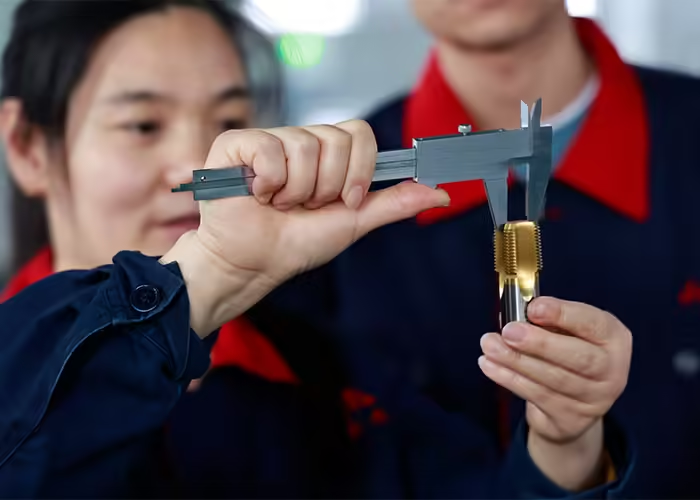
Drill bit coatings are thin surface layers applied to the cutting tool, usually through physical vapor deposition or chemical vapor deposition processes. These coatings do not change the core structure of the drill bit but enhance surface properties such as hardness, lubricity, and oxidation resistance.
When applied correctly, drill bit coatings reduce cutting forces, improve chip evacuation, and extend tool life without altering tool dimensions.
Why Drill Bit Coatings Matter in Machining
During drilling, heat and friction are unavoidable. Uncoated tools experience direct contact between the cutting edge and the workpiece, leading to rapid wear. Drill bit coatings act as a protective barrier that reduces friction and minimizes heat transfer into the tool body.
According to tooling performance studies published by industrial cutting tool manufacturers, coated drill bits can extend tool life by 30 to 200 percent depending on material and cutting conditions. This makes coatings essential for productivity-driven machining environments.
Common Types of Drill Bit Coatings
Titanium Nitride Coating
Titanium nitride is one of the most widely used drill bit coatings. It provides increased surface hardness and reduced friction, making it suitable for general-purpose drilling. TiN-coated drill bits perform well in steel, aluminum, and non-ferrous materials but are less effective at extremely high temperatures.
Titanium Carbonitride Coating
Titanium carbonitride offers higher hardness and better wear resistance than TiN. Drill bit coatings of this type are commonly used for tougher materials and higher cutting speeds. TiCN performs well in applications where edge wear is the primary concern.
Titanium Aluminum Nitride Coating
Titanium aluminum nitride drill bit coatings are designed for high-temperature machining. They form a protective aluminum oxide layer during cutting, which improves oxidation resistance. TiAlN coatings are widely used for stainless steel, alloy steel, and dry drilling operations.
Aluminum Titanium Nitride Coating
AlTiN coatings provide even higher thermal stability than TiAlN. These drill bit coatings are suitable for high-speed CNC drilling and abrasive materials. They are especially effective in dry or minimal-lubrication environments.
Comparison of Drill Bit Coatings
| Drill Bit Coatings | Heat Resistance | Wear Resistance | Friction Reduction | Typical Applications |
|---|---|---|---|---|
| TiN | Medium | Medium | Good | General-purpose drilling |
| TiCN | High | High | Very Good | Harder steels, higher speeds |
| TiAlN | Very High | High | Good | Stainless steel, dry drilling |
| AlTiN | Extremely High | Very High | Good | High-speed CNC machining |
This comparison highlights how different drill bit coatings support specific machining requirements.
Drill Bit Coatings and Cutting Speed
Drill bit coatings allow higher cutting speeds by protecting the cutting edge from heat-related softening. For example, TiAlN-coated drill bits can often operate at speeds 20–40 percent higher than uncoated tools, according to machining performance data from industrial tooling benchmarks.
However, increasing speed without adjusting feed rates or cooling strategies may still lead to premature failure. Drill bit coatings enhance performance, but they do not eliminate the need for proper cutting parameters.
Coatings vs Base Drill Bit Materials
Drill bit coatings should always be selected in combination with suitable base materials. High-speed steel drill bits benefit significantly from coatings, gaining improved wear resistance and longer service life.
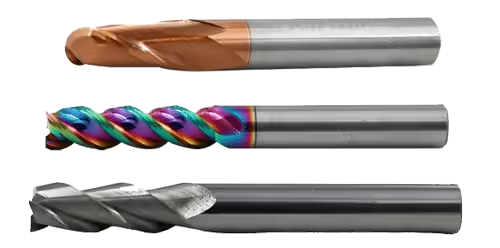
Cobalt drill bits with coatings perform exceptionally well in heat-intensive drilling. Solid carbide drill bits often use advanced coatings to further improve abrasion resistance and tool stability.
Coatings cannot compensate for incorrect base material selection, but when matched properly, they maximize tool efficiency.
Drill Bit Coatings and Chip Evacuation
Lower friction surfaces help chips flow smoothly along the flute, reducing the risk of chip welding or clogging. This is especially important in deep-hole drilling or when machining ductile materials. Drill bit coatings contribute to more stable chip formation and reduced cutting interruptions.
Cost Efficiency of Coated Drill Bits
Although coated drill bits typically have a higher initial cost, they often deliver a lower cost per hole. Extended tool life, reduced downtime, and improved consistency all contribute to better long-term value.
For production environments, drill bit coatings are a strategic investment rather than an optional upgrade.
Best Practices for Using Coated Drill Bits
Avoid excessive regrinding that removes the coating
Use appropriate speeds to activate coating benefits
Avoid thermal shock caused by inconsistent coolant application
Store coated tools properly to prevent surface damage
Monitor wear patterns to optimize replacement cycles
FAQ
What are drill bit coatings used for?
Drill bit coatings reduce friction, improve heat resistance, and extend tool life.
Do drill bit coatings work without coolant?
Yes, some coatings such as TiAlN and AlTiN are designed for dry drilling.
Can drill bit coatings be applied to HSS tools?
Yes, coatings significantly improve the performance of HSS drill bits.
Are coated drill bits suitable for soft materials?
They can be used, but benefits are most noticeable in harder materials.
Do coatings change drill bit size?
No, coatings are extremely thin and do not affect hole dimensions.
Conclusion
Drill bit coatings play a critical role in modern machining by improving tool durability, cutting efficiency, and thermal stability. When selected correctly, coatings reduce operating costs and improve production reliability across a wide range of drilling applications.
If you need expert guidance on coated drill bits or customized drilling solutions, contact Shandong Tool for professional support and high-performance tooling options.


 English
  Russian
  German