

Table of Contents
Introduction
Milling cutter tools are a crucial component in CNC machining, directly affecting cutting efficiency, surface finish, and tool life. Choosing the right milling cutter tools ensures optimal performance, reduces costs, and extends the lifespan of your CNC cutting tools.
This guide will explore the types of milling cutter tools, material considerations, coatings, geometry, maintenance tips, and practical strategies to help you select the perfect tools for your machining operations.
What Are Milling Cutter Tools?
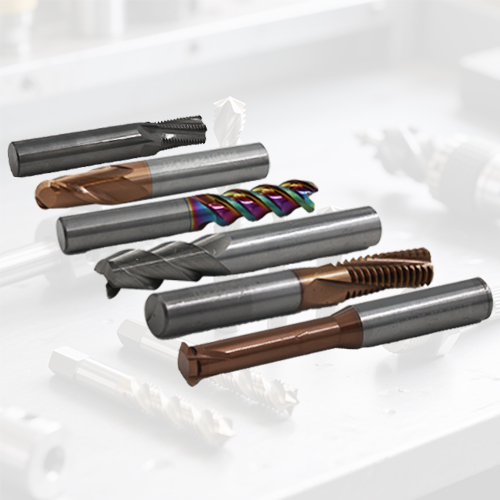
Milling cutter tools are rotating cutting instruments designed to remove material from a workpiece in CNC machining. They come in various shapes, sizes, and materials, each optimized for specific operations. By properly selecting milling cutter tools, you can achieve precise cuts, smoother finishes, and more efficient production.
Milling cutter tools work by combining rotation speed, feed rate, and geometry to remove material accurately. Understanding the principles of chip formation and cutting forces helps in selecting the right tool for your machining process.
Types of Milling Cutter Tools
There are several types of milling cutter tools, each suited for specific operations in CNC machining.
| Milling Cutter Tool | Description | Ideal Use | Material |
|---|---|---|---|
| End Mill | Cutting edges on end and sides | Slotting, profiling | Carbide or HSS |
| Face Mill | Large diameter, multiple inserts | Facing, roughing | Carbide inserts |
| Ball Nose Cutter | Rounded tip | 3D contouring, molds | Solid carbide |
| Fly Cutter | Single-point cutting edge | Large flat surfaces | HSS |
| T-Slot Cutter | Shaped for T-slots | Tooling plates, fixtures | HSS or carbide |
| Shell Mill | Multi-insert design | Heavy material removal | Carbide inserts |
End mills and ball nose cutters are widely used for profiling and 3D contouring, while face mills and shell mills excel in high-efficiency material removal for flat surfaces. Selecting the correct type for your operation ensures consistent performance and longer tool life.
Material Considerations for Milling Cutter Tools
The material of milling cutter tools significantly affects performance and durability.
HSS (High-Speed Steel) is tough, cost-effective, and easy to regrind, making it ideal for general-purpose machining and interrupted cuts. Carbide is harder, heat-resistant, and capable of high-speed operations, perfect for precision CNC machining and harder materials. Ceramic and CBN tools are used for specialized high-temperature applications and abrasive materials.
Different workpiece materials require specific tool materials: aluminum and non-ferrous metals work best with polished carbide tools, while steel and stainless steel may require coated carbide or HSS cutters. Titanium and hard alloys demand tools with higher heat resistance, such as carbide or ceramic.
Coatings and Surface Treatments
Applying coatings to milling cutter tools improves wear resistance, heat management, and cutting efficiency.
| Coating | Best For | Benefit |
|---|---|---|
| TiAlN | High-speed steel & steel alloys | Heat resistance |
| AlTiN | Hard steels & titanium | Wear resistance |
| DLC | Non-ferrous metals | Low friction |
| CVD Diamond | Composites, graphite | Maximum durability |
Choosing the right coating for your milling cutter tools helps extend tool life and improves machining performance, especially in high-speed CNC operations.
Key Geometrical Parameters
Tool geometry plays a critical role in cutting efficiency and surface quality. Important parameters include flute count, helix angle, corner radius, and edge geometry.
Flute count of 2–3 is suitable for roughing, while 4–6 flutes are better for finishing operations. Higher helix angles (35°–45°) are ideal for soft materials, whereas lower angles (20°–30°) work better for harder materials. Rounded corners reduce edge chipping and distribute cutting stress evenly. Proper edge geometry ensures precise cuts and improves tool life.
Matching Milling Cutter Tools to Operations
| Operation | Recommended Tool | Feature | Benefit |
|---|---|---|---|
| Roughing | Face Mill / Shell Mill | Multi-insert design | High material removal rate |
| Finishing | Ball Nose / End Mill | Small diameter, high flute count | Smooth surface finish |
| Slotting | End Mill | Center-cutting edges | Accurate grooves |
| Contouring | Ball Nose End Mill | Rounded tip | Precision 3D machining |
| Facing | Fly Cutter | Single-point blade | Flat and even surfaces |
Choosing the appropriate milling cutter tools for the specific operation ensures optimal performance, prevents tool damage, and maintains consistent quality.

Maintenance Tips for Milling Cutter Tools
Proper maintenance extends the life of milling cutter tools and ensures consistent machining results. Clean tools after each use to remove chips and coolant residue. Store in dry, temperature-controlled environments to prevent corrosion. Inspect regularly for wear, chipping, or edge rounding. Regrind HSS tools as needed, while carbide tools may require professional sharpening. Ensure proper tool holder alignment and spindle calibration to minimize vibration.
Cost and Efficiency Considerations
Selecting milling cutter tools involves balancing initial cost with long-term efficiency. HSS tools have a lower upfront cost and are easy to regrind, suitable for small-batch operations. Carbide tools have a higher initial cost but offer longer life and faster cutting speeds, ideal for large-scale CNC production. Proper tool selection reduces downtime, improves surface quality, and optimizes operational costs.
Conclusion
Milling cutter tools are vital to achieving precision, efficiency, and durability in CNC machining. By carefully selecting the right type, material, geometry, and coating — along with proper maintenance — you can maximize performance and reduce costs. Shandong Tool provides a wide range of precision milling cutter tools, including custom solutions tailored to your CNC operations. Contact us today to find the ideal milling cutter tools for your production needs.
FAQ
What are milling cutter tools used for?
They remove material from a workpiece to achieve precise shapes, slots, and surface finishes in CNC machining.
How do I choose the right milling cutter tools?
Consider the material of the workpiece, cutting operation, geometry, and coating.
What types of milling cutter tools are common?
End mills, face mills, ball nose cutters, fly cutters, T-slot cutters, and shell mills.
What is the difference between carbide and HSS milling cutter tools?
Carbide tools are harder and heat-resistant, while HSS tools are tougher and easier to regrind.
How should I maintain milling cutter tools?
Clean after use, store properly, inspect regularly, and regrind or replace worn tools.
Which coatings are best for milling cutter tools?
TiAlN, AlTiN, DLC, and CVD diamond coatings enhance wear resistance, cutting speed, and tool life.


 English
  Russian
  German