Get in touch with our team for product inquiries,
customization, or cooperation.

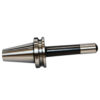
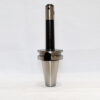
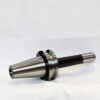
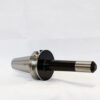
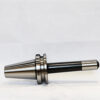
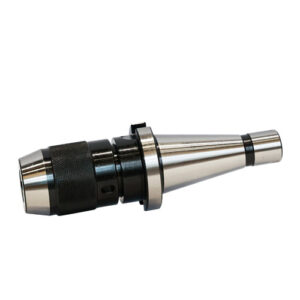
A BT-SLA Handle is a specialized tool holder designed for CNC machining that utilizes the BT taper interface combined with the SLA (Slim Line Adapter) system. The BT taper offers excellent rigidity and precise tool holding, while the SLA system allows for more compact and space-efficient tool holders, making them ideal for use in machines where tool clearance or limited space is a concern. The BT-SLA handle is engineered for high-precision tasks and is commonly used in applications that require stable clamping, minimal runout, and the ability to hold smaller tools or tools in confined spaces.
Compact Design:
The SLA (Slim Line Adapter) design makes the BT-SLA handle more compact compared to traditional BT tool holders. This makes it ideal for applications where space is limited, such as in high-speed spindles or when working with small tools in constrained areas.
High Rigidity and Precision:
The BT taper interface ensures a rigid and stable connection between the tool holder and the machine spindle, resulting in minimal tool deflection and consistent machining precision, even during high-speed operations or heavy-duty cutting.
Versatile Tool Holding:
The BT-SLA handle can accommodate a wide range of tools, including end mills, drills, reamers, taps, and more. The handle is especially useful in applications where small, high-precision tools are needed, such as in micromachining and fine detail work.
Reduced Tool Vibration:
The strong clamping force and rigidity of the BT-SLA handle significantly reduce tool vibration, leading to improved surface finishes, enhanced cutting accuracy, and longer tool life. This makes the handle ideal for achieving high-quality results in delicate or high-precision machining tasks.
Tool Stability:
The BT taper interface and SLA design provide excellent stability even at high speeds or under heavy cutting loads. This makes the BT-SLA handle highly effective for applications that require constant tool stability and minimal runout, improving machining accuracy and surface finish quality.
