

Table of Contents
Introduction
Aluminum is one of the most widely used materials in CNC machining due to its lightweight, high strength-to-weight ratio, and excellent corrosion resistance. However, machining aluminum efficiently requires the right cutting tools. Choosing the best CNC cutting tools for aluminum ensures higher productivity, longer tool life, better surface finish, and reduced costs.
In this article, we’ll cover the types of CNC cutting tools suitable for aluminum, materials and coatings, cutting parameters, and practical tips to maximize performance.
Why Aluminum Requires Specialized CNC Cutting Tools
Aluminum’s softness compared to steel or titanium can create challenges such as built-up edge (BUE), which reduces tool life and damages surface finish. High-speed machining aluminum also generates heat that can affect tool performance. Therefore, using tools specifically designed for aluminum is critical.

Types of CNC Cutting Tools for Aluminum
End Mills
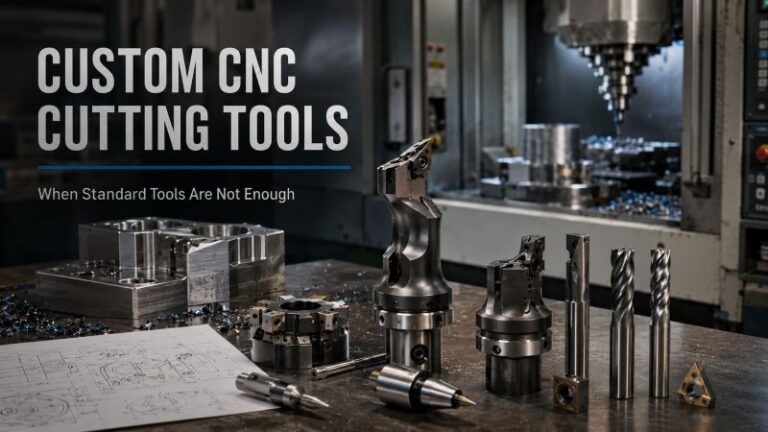
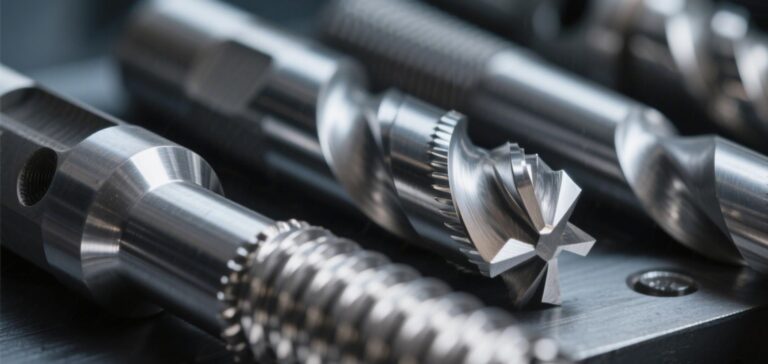
End mills are the most versatile cutting tools for aluminum. For best results:
- Use high-flute end mills (3–4 flutes) to increase surface finish without reducing chip evacuation.
- Consider variable-pitch end mills to reduce vibration.
Ball Nose End Mills
Used for 3D contouring, molds, and curved surfaces. Ball nose end mills provide smooth finishes and prevent tool marks on complex shapes.
Face Mills
Face milling tools are ideal for large surface removal. For aluminum, choose cutters with positive rake angles and polished flutes to minimize chip adhesion.
Drills and Twist Drills
When drilling aluminum, use sharp point angles (typically 118–135°) to prevent BUE and ensure clean holes. Carbide drill bits are preferred for high-speed applications.
Router Bits
For softer aluminum alloys or sheet processing, CNC router bits are efficient, especially for cutting thin plates with minimal burr formation.
Best Materials for CNC Cutting Tools for Aluminum
Selecting the right material affects tool life and efficiency:
- Solid Carbide: Best for high-speed machining and precise applications. Excellent wear resistance and maintains sharp edges at high temperatures.
- HSS (High-Speed Steel): Good toughness, suitable for lower-speed operations or less rigid setups.
- Coated Tools: Aluminum-specific coatings like TiB2 or DLC reduce adhesion and improve surface finish.
| Tool Material | Strength | Heat Resistance | Best Use Case |
|---|---|---|---|
| Solid Carbide | Very High | High | High-speed CNC, precision parts |
| HSS | Medium | Medium | Manual or low-speed CNC |
| Coated Carbide | High | Very High | Aggressive machining, thin chips, adhesion reduction |
Recommended Tool Geometry for Aluminum
- Positive Rake Angles: Reduce cutting forces and minimize built-up edge.
- Polished Flutes: Allow chips to evacuate smoothly and prevent aluminum adhesion.
- Helix Angle 35–45°: Ideal for general milling; higher angles improve chip removal.
Cutting Parameters for Aluminum CNC Machining
- Spindle Speed: 10,000–25,000 RPM (depending on machine and tool material)
- Feed Rate: 0.05–0.2 mm/tooth
- Depth of Cut: 0.5–3 mm for finishing, 3–10 mm for roughing
- Coolant/Lubrication: Light oil mist or dry machining with coated carbide
Common Mistakes When Machining Aluminum
- Using tools designed for steel or harder metals
- Neglecting polished flutes and positive rake geometry
- Excessive feed or depth of cut, causing BUE
- Ignoring proper chip evacuation
Avoiding these mistakes ensures better tool life, lower costs, and higher surface quality.

Advantages of Using Optimized CNC Cutting Tools for Aluminum
- Reduced cycle times due to high-speed machining
- Longer tool life from aluminum-specific coatings and geometry
- Improved surface finish and dimensional accuracy
- Lower scrap rates and fewer secondary operations
Conclusion
Choosing the best CNC cutting tools for aluminum is critical for productivity, surface quality, and tool life. Using tools specifically designed for aluminum, with proper geometry, materials, and coatings, allows manufacturers to achieve faster, cleaner, and more efficient machining.
For expert guidance and high-performance aluminum CNC cutting tools, contact Shandong Tool for customized solutions tailored to your production needs.
FAQ
What is the best CNC cutting tool for aluminum?
Solid carbide end mills with polished flutes and positive rake angles are most effective.
Can I use HSS tools for aluminum?
Yes, for low-speed or low-volume operations, but carbide is preferred for high-speed CNC.
How do coatings improve aluminum machining?
3–4 flutes are ideal for balancing chip evacuation and surface finish.
What flute count is best for aluminum?
3–4 flutes are ideal for balancing chip evacuation and surface finish.
Is coolant necessary for aluminum CNC milling?
Light oil mist is often sufficient; coated carbide allows dry milling in many cases.
es.

 English
  Russian
  German