

Table of Contents
Introduction
CNC milling cutting tools are fundamental in modern manufacturing, determining the quality, efficiency, and precision of machined parts. The right selection, usage, and maintenance of these tools directly impact tool life, surface finish, and operational costs.
This guide provides an in-depth overview of CNC milling cutting tools, including types, materials, coatings, applications, machining strategies, parameters, and maintenance practices. With this knowledge, manufacturers can maximize productivity, reduce downtime, and ensure consistent, high-quality results.

What Are CNC Milling Cutting Tools?
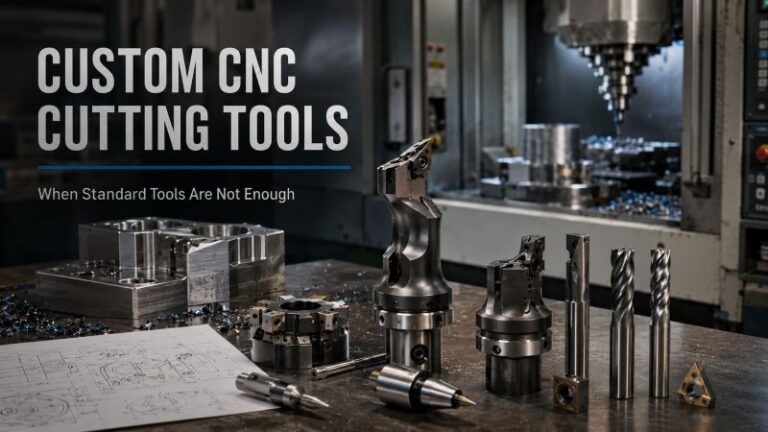
CNC milling cutting tools are rotary tools used to remove material from a workpiece in milling machines. They include end mills, face mills, ball nose cutters, T-slot cutters, shell mills, and others. Each type is designed for specific operations, cutting strategies, and workpiece materials. Understanding the distinctions between cutter types allows operators to select the right tool for the job, ensuring efficiency, accuracy, and prolonged tool life.
Types of CNC Milling Cutting Tools
| Tool Type | Description | Typical Applications | Advantages | Notes |
|---|---|---|---|---|
| End Mill | Cutting edges on tip and sides | Slotting, profiling, contouring, 2D/3D machining | Versatile, precise | Single or multi-flute designs available |
| Face Mill | Multi-insert cutter | Large surface material removal | Fast, flat surfaces | Ideal for roughing and heavy cutting |
| Ball Nose Cutter | Rounded tip | 3D surfaces, mold/die making | Smooth contouring | Perfect for complex geometries |
| T-Slot Cutter | Shaped for T-slots | Fixture and tool slot machining | Accurate grooves | Requires precise setup |
| Shell Mill | Multi-insert roughing | Heavy material removal | Durable, high feed rate | Compatible with large diameter spindles |
| Corner Radius End Mill | Rounded edges | Reduce chipping, longer tool life | Strong edges, improved finish | Good for finishing and semi-finishing |
| Slab Mill | Large diameter, multiple inserts | Wide surface roughing | High feed rates, efficient | Often combined with face milling |
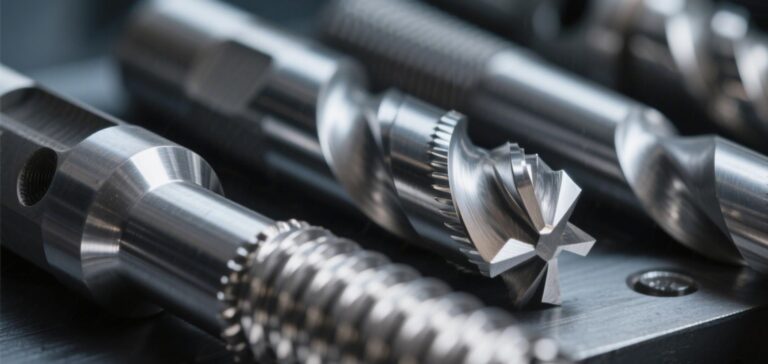
| Thread Milling Cutter | Helical cutting edges | Thread creation | Adjustable, accurate | Flexible for multiple thread sizes |
Materials and Coatings
The material and coating of CNC milling tools greatly affect wear resistance, cutting efficiency, and heat tolerance.
| Material/Coating | Best For | Key Benefit | Notes |
|---|---|---|---|
| Solid Carbide | Hardened steel, stainless steel, titanium | High hardness, heat resistance | Ideal for high-speed and precision machining |
| HSS | Aluminum, softer steels | Flexible, low cost | Limited wear resistance compared to carbide |
| TiAlN Coating | Steel, stainless steel | Heat resistance, longer tool life | Suitable for high-speed cutting |
| AlTiN Coating | Hard steels, titanium | Wear resistance, high temperature tolerance | Excellent for high-performance CNC operations |
| DLC Coating | Aluminum, non-ferrous metals | Reduced friction, smooth chip flow | Enhances surface finish |
| CVD Diamond | Composites, abrasive alloys | Maximum wear resistance | Ideal for long production runs |
Applications of CNC Milling Cutting Tools
CNC milling cutting tools are widely used across industries due to their versatility:
- Precision Components: Aerospace, automotive, and medical parts requiring tight tolerances and smooth surfaces.
- Mold and Die Making: Ball nose cutters and corner radius end mills for complex 3D contours.
- High-Volume Production: Face mills and shell mills provide fast material removal with minimal downtime.
- Hard Material Machining: Carbide tools effectively cut hardened steel, titanium, and exotic alloys.
Tool Selection Guidelines
Selecting the right CNC milling cutting tool requires analyzing multiple factors:
- Workpiece Material: Aluminum, steel, titanium, composites require different tool geometries, coatings, and flute counts.
- Operation Type: Roughing needs tools optimized for high material removal; finishing requires precise geometry and smooth edges.
- Machine Capability: Spindle speed, feed rate, power, and rigidity must align with tool design.
- Cutting Edge Geometry: Number of flutes, helix angle, corner radius, and relief angles influence cutting performance.
- Coating Selection: Match coating type to material and cutting conditions to extend tool life.
Machining Parameters and Optimization
| Tool Type | Recommended Speed (RPM) | Feed Rate (mm/min) | Depth of Cut (mm) | Notes |
|---|---|---|---|---|
| End Mill | 5000-15000 | 100-400 | 0.5-3 | Depending on flute number and material |
| Face Mill | 2000-8000 | 500-2000 | 2-6 | Multi-insert design allows high feed |
| Ball Nose | 4000-12000 | 80-250 | 0.2-2 | Smaller depths for precision 3D cuts |
| T-Slot | 3000-9000 | 50-200 | 1-3 | Slow feed ensures accurate slot profile |
| Shell Mill | 2000-7000 | 600-1800 | 3-8 | Heavy-duty roughing applications |
Correct speeds, feeds, and depth of cut are crucial to maximize performance and extend tool life.
Maintenance and Best Practices
| Maintenance Task | Recommendation | Frequency |
|---|---|---|
| Cleaning | Remove chips, coolant residue | After each operation |
| Inspection | Check edges, flutes, coating | Weekly or per shift |
| Storage | Dry, organized racks | Always |
| Lubrication/Coolant | Ensure correct type and flow | During machining |
| Sharpening/Replacement | Regrind HSS, replace carbide inserts | As needed |
| Wear Monitoring | Track tool life and performance | Continuous |
Proper maintenance reduces downtime, improves accuracy, and enhances cutting efficiency.
Common Mistakes to Avoid
- Using incorrect tool type for the workpiece or operation
- Running dull or chipped tools
- Incorrect spindle speed and feed settings
- Poor storage leading to edge damage
- Ignoring coating wear or tool deformation

Advanced Tips for CNC Milling Cutting Tools
- Use high-efficiency milling strategies to reduce cycle time
- Optimize toolpath for consistent load and minimal vibration
- Apply coolant strategically to reduce thermal deformation
- Rotate tools based on wear analysis to maximize lifespan
- Use tool monitoring sensors if available for predictive maintenance
Conclusion
CNC milling cutting tools are essential for precision, productivity, and efficiency in modern machining. By selecting the correct cutter, applying appropriate machining strategies, and maintaining tools properly, operators can achieve superior results, reduce costs, and improve overall manufacturing performance. For professional guidance and high-quality CNC milling cutting tools, contact Shandong Tool today.
FAQ
What are CNC milling cutting tools used for?
They remove material from workpieces to create precise shapes, surfaces, and contours in CNC machining operations.
How do I select the right milling cutter?
Consider material, operation type, machine capability, cutter geometry, and coating.
Can a tool perform both roughing and finishing?
Yes, depending on cutter type, geometry, and coating, some tools are versatile for multiple operations.
How should milling cutters be maintained?
Clean after use, inspect regularly, store properly, and regrind or replace worn tools as needed.
Do coatings improve performance?
Yes. Coatings increase wear resistance, reduce friction, enhance heat tolerance, and extend tool life.

 English
  Russian
  German